- Introduction – When Is It Worth Dividing an Apartment into Two Units?
- What Criteria Must an Apartment Meet to Be Divided?
- Paperwork Involved in Splitting an Apartment
- Architectural Design and Numbering of the New Units
- How Does the Split Affect the Common Property?
- Impact of the Split on Rental Income
- Potential Problems During the Split
- Costs Associated with Splitting an Apartment
- Summary – How to Divide an Apartment Successfully?
1. Introduction – When Is It Worth Dividing an Apartment into Two Units?
Splitting a large apartment into two self‑contained units can bring significant benefits. In big cities, where rental prices are high, smaller units often yield higher overall rent. Owners increasingly choose this strategy to maximise the potential of their property, either for rental or for separate resale.
Why consider a split?
- Higher rental income – Two smaller flats can generate more rent than one large unit.
- Increased market value – After the split, total market value may rise, improving resale prospects or mortgage terms.
- Management flexibility – You can rent one flat and live in the other, or adopt different rental strategies for each.
2. What Criteria Must an Apartment Meet to Be Divided?
Not every flat can legally become two. Each new unit must meet technical standards ensuring liveability. Key requirements:
- Independent entrances – Ideally from a staircase or corridor, sometimes requiring creation of a new doorway.
- Separate sanitary facilities – Each unit must have its own bathroom/WC.
- Kitchen or kitchenette – Polish regulations demand a cooking area; in studios it may be an open‑plan kitchenette.
Both units must also satisfy minimum room sizes, corridor widths, window areas and daylight standards.
Paperwork Involved in Splitting an Apartment
The legal process can be lengthy and involves several authorities.
- Co‑owners’ approval – The homeowners’ association must consent, as the split alters shares in common parts.
- Certificate of self‑containment – Issued by the mayor or county office, confirming each new unit meets housing standards.
- Building permit or work notification – Required if structural changes are needed.
- Notarial deed – Final step: a notary records the split and applies for new land‑registry entries.
Architectural Design and Numbering of the New Units
A qualified architect must prepare a plan that meets building codes and provides functional layouts.
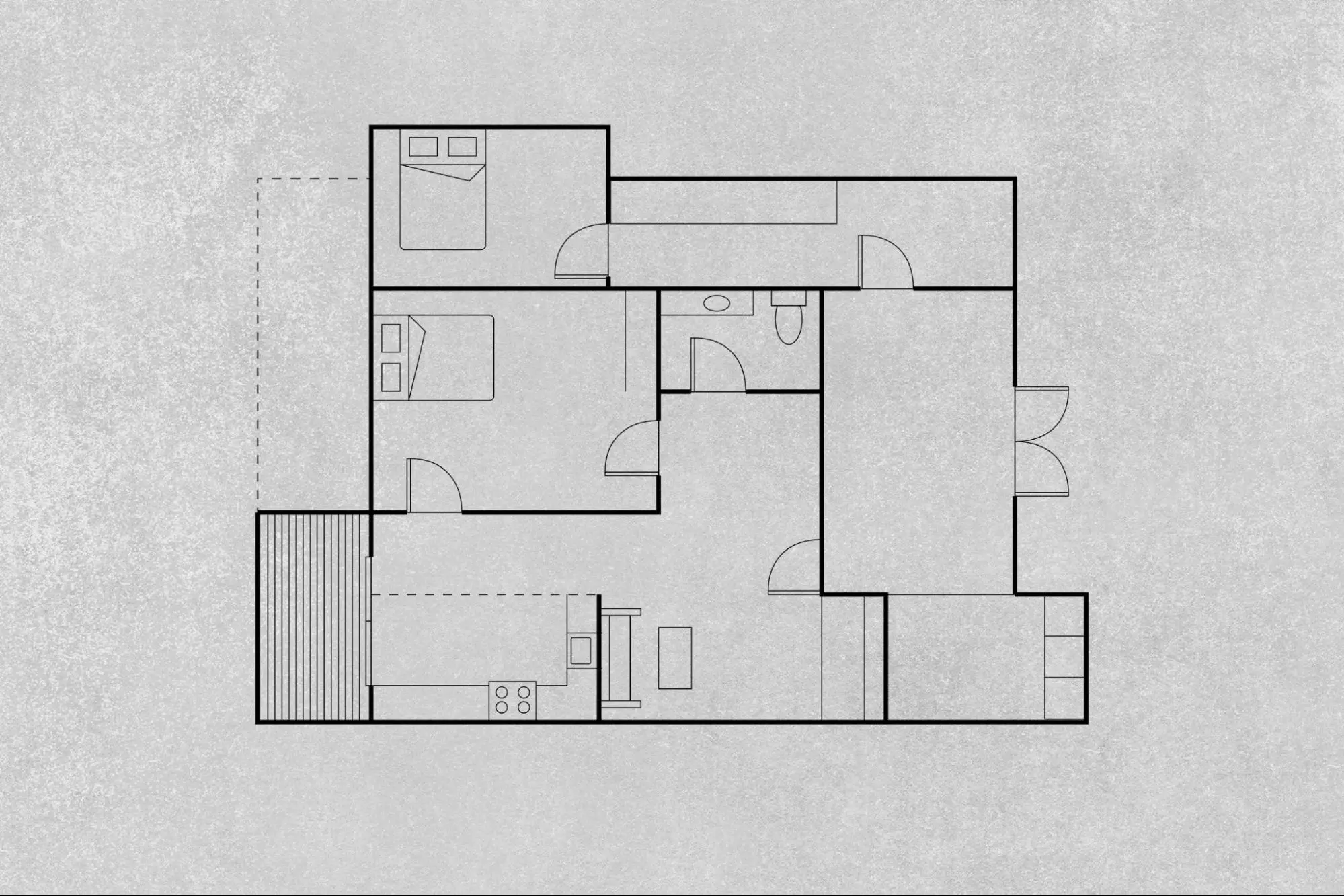
The design should cover:
- Partition walls – Which to remove or build.
- Entrance locations – New doors and possible staircase adjustments.
- Separate utilities – Independent meters for electricity, water, gas.
The city or borough will assign new unit numbers, often by adding letters (e.g., 11A, 11B).
How Does the Split Affect the Common Property?
Every flat owner holds a share in common areas. After a split, shares are recalculated in proportion to each new unit’s floor area. Example: a 100 m² flat with a 10 % share, divided into 60 m² and 40 m² units, becomes 6 % and 4 % respectively.
Impact of the Split on Rental Income
The primary motivation is often higher rent. Two smaller units are popular with students, singles and young couples, command higher €/m² rates, and allow mixed rental strategies (long‑term vs short‑stay).
Potential Problems During the Split

Common obstacles:
- No approval from the association – Especially if common areas are affected.
- Technical constraints – Old buildings may lack capacity for extra plumbing or wiring.
- Lengthy bureaucracy – Permits and certificates can take months, even a year.
Costs Associated with Splitting an Apartment

Main cost factors:
1. Architect/engineer fees – Several to tens of thousands of PLN, depending on complexity.
2. Construction works – New walls, doors, utility rerouting; labour costs vary widely.
3. Administrative fees – Certificates, permits, work notifications: hundreds to a few thousand PLN.
4. Notary and registry fees – Deed costs depend on property value, plus land‑registry charges.
Summary – How to Divide an Apartment Successfully?
A well‑planned split can boost rental yield and market value, but demands technical viability, legal compliance and budget discipline. Key steps: engage an architect, secure homeowners’ approval, obtain all permits, execute construction correctly and finalise the notarial deed. In large cities, demand for smaller units often means the investment pays off, provided you account for the full cost and timeline.